Projects

A selection of my work.


Structural Bracket

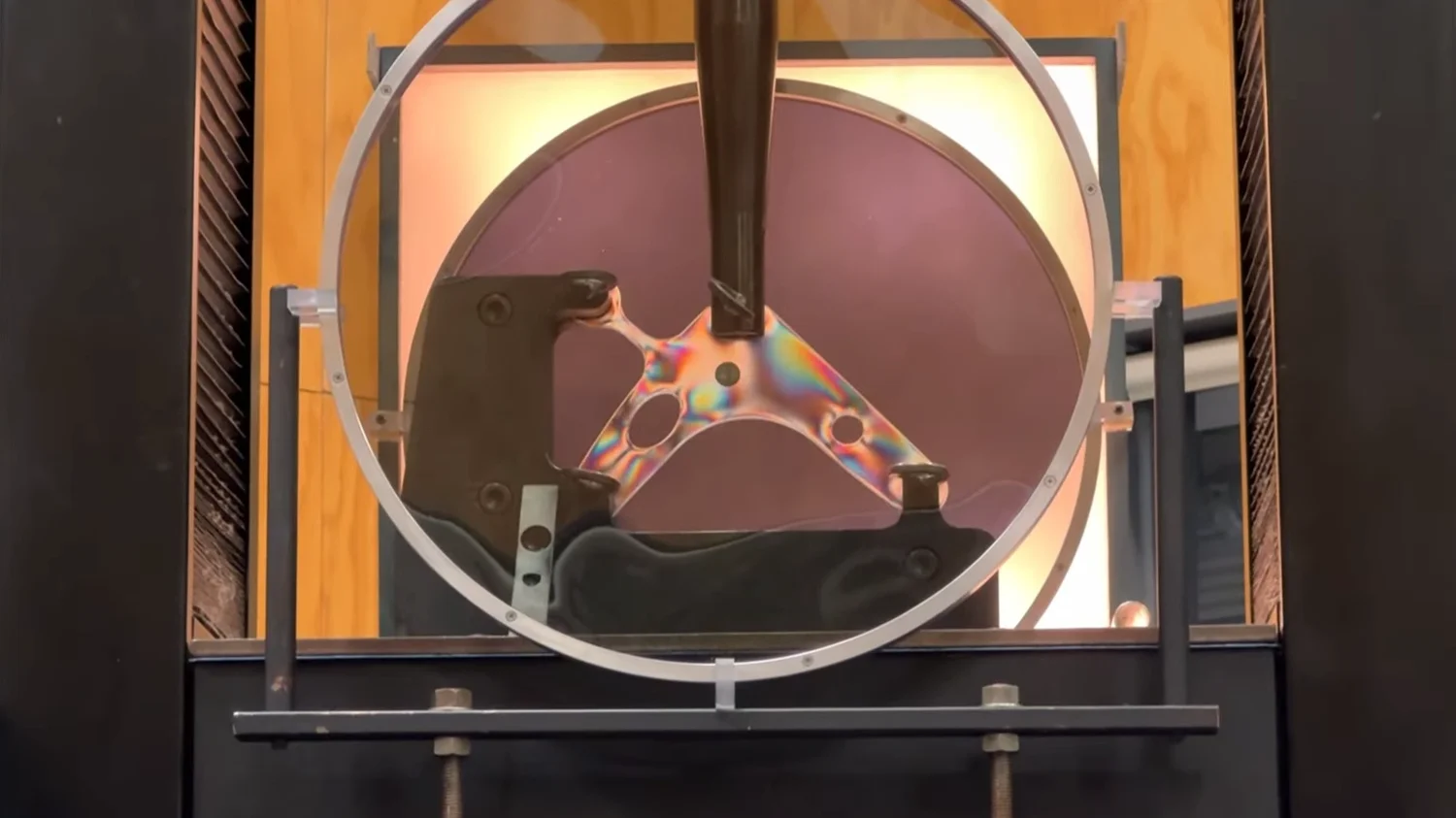
FEA-Optimised Structural Bracket

Polycarbonate bracket designed in CAD and iteratively optimised through ANSYS FEA, withstanding 4 kN compressive and 3 kN tensile loads while routing five cables and a pipe through the structure.

CAD ANSYS FEA University Project

Overview

A structural bracket designed for a lightweight machine, required to withstand a 4000N downward compressive load and a 3000N upward tensile load. Cut from 9.5mm polycarbonate sheet with a yield strength of 66.6MPa, the bracket must also allow five cables and one pipe to pass through without interference.

FEA Setup

The 2016 reference bracket and its physical test results were used to calibrate the ANSYS simulation. Fixed supports were tested first but prevented pin hole rotation, making them a poor approximation of the real testing environment. Cylindrical supports at pin holes A, B and C with a 1mm upward displacement produced a reaction of 3188.9N against the measured 3056–3084N, and were carried forward for the upward load case. Compression-only supports gave a closer result for the downward case at 4259.8N against the measured 3967–3990N. The final setup uses a displacement boundary condition at pin D and reads the reaction force directly, mirroring the physical test procedure.

Bracket Design

Both team members developed independent concept designs before comparing results. Three typologies were evaluated in ANSYS, with the first ruled out due to most of its load being translated into bending rather than compression. The second typology was chosen for its ability to resist both load directions through primarily compressive forces, and for the distinct stress difference between the two load cases, allowing directional stiffness to be tuned through iteration.

Topology optimisation at 50% mass reduction provided the base geometry. Pipe and cable placement was resolved beforehand, with the final arrangement grouping the pipes in an elliptical cutout and routing the cable through a separate square cutout. Four major bracket iterations followed, each tested under 1mm upward and downward displacement in ANSYS, with equivalent von Mises stress kept below the 66.6MPa yield limit throughout.

Early iterations established the leg geometry but introduced too many holes or excess material. The final design increased leg widths, removed internal reinforcing bars and added fillets throughout. The bracket was modelled at 9.2mm thickness rather than the nominal 9.5mm to introduce a safety factor, based on a measured average of 9.3mm across the physical polycarbonate samples and the higher scoring penalty for yielding over over-stiffness.

Results

Mesh convergence was confirmed using both hex-dominated and tetrahedral meshes. The bracket yields at pinhole D at approximately 5500N under compressive load, verified by hand calculations for buckling. Machining uses a single 12mm tool across roughing and finishing operations, the largest tool the CAM software would allow given the 18mm cable hole diameter.

Ball Transport Box

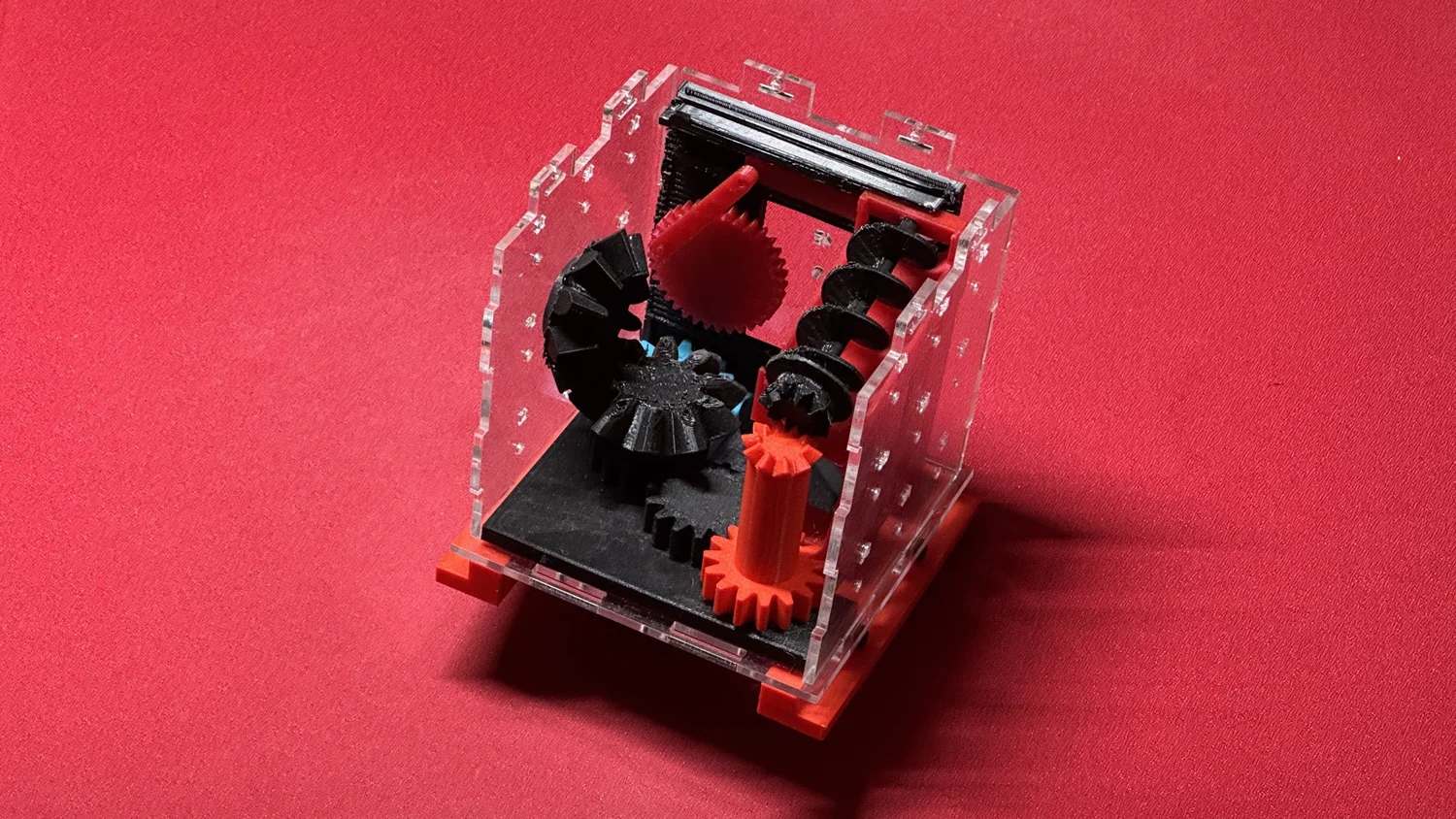
Compact Ball Transport System

3D printed assembly of several mechanisms working in sequence to transport a steel ball across a small enclosure in a precise timed run, driven by a single input shaft and simulated in Autodesk Inventor.

3D Printing CAD Prototyping University Project

Overview

A mechanism designed to move a 9.5mm steel ball from one side of a 100x100x100mm acrylic box to the other in exactly 5 seconds, driven by a 60 RPM input shaft. The entry and exit holes sit at the same height, requiring both a way to initiate ball movement and a timed hold at the exit.

Design Process

Concept designs were developed independently by each team member and evaluated through a morphological matrix and Pugh's analysis, arriving at a declined ramp feeding into an Archimedes screw. The initial layout was sketched in OpenBrush, a VR application, before moving to CAD.

The ramp sits at 5 degrees, delivering the ball to the screw in 0.317 seconds. The screw has a 15mm pitch and rotates 4 times, carrying the ball 60mm to the exit in about 4 seconds. A crank slider door holds it there and releases it just before the 5 second mark.

The screw is suspended above a half-pipe support structure and driven through a chain of bevel and spur gears from the input shaft. Gears were generated through Autodesk's Design Accelerator and joined by solid extrusions to maintain a 1:1 ratio throughout. A twist-and-lock coupling holds the driving bevel gear to the wall, locking anticlockwise to prevent loosening under load.

Simulation and Results

Dynamic simulation in Autodesk Inventor placed the ball at the exit at 4.71 seconds. Imposed motion replaced 3D gear contacts to keep the simulation stable, with 3D contacts applied only to the ramp, screw and half-pipe. The crank slider was not included in the simulation.

Manufacturing

All parts were 3D printed in PLA on Prusa Slicer machines. Each part was modelled 0.2mm undersized to suit the 0.4mm nozzle tolerance, allowing assembly without adhesive. Prints were batched to contain the cost of any failed run, oriented largest-face-down to reduce supports. The half-pipe support went through three iterations, with the final version shelling out the legs to cut print time while maintaining rigidity. The full mechanism cost around $14.66 and took approximately 271 minutes to print.

Multitool Keychain

SLS Multitool Keychain

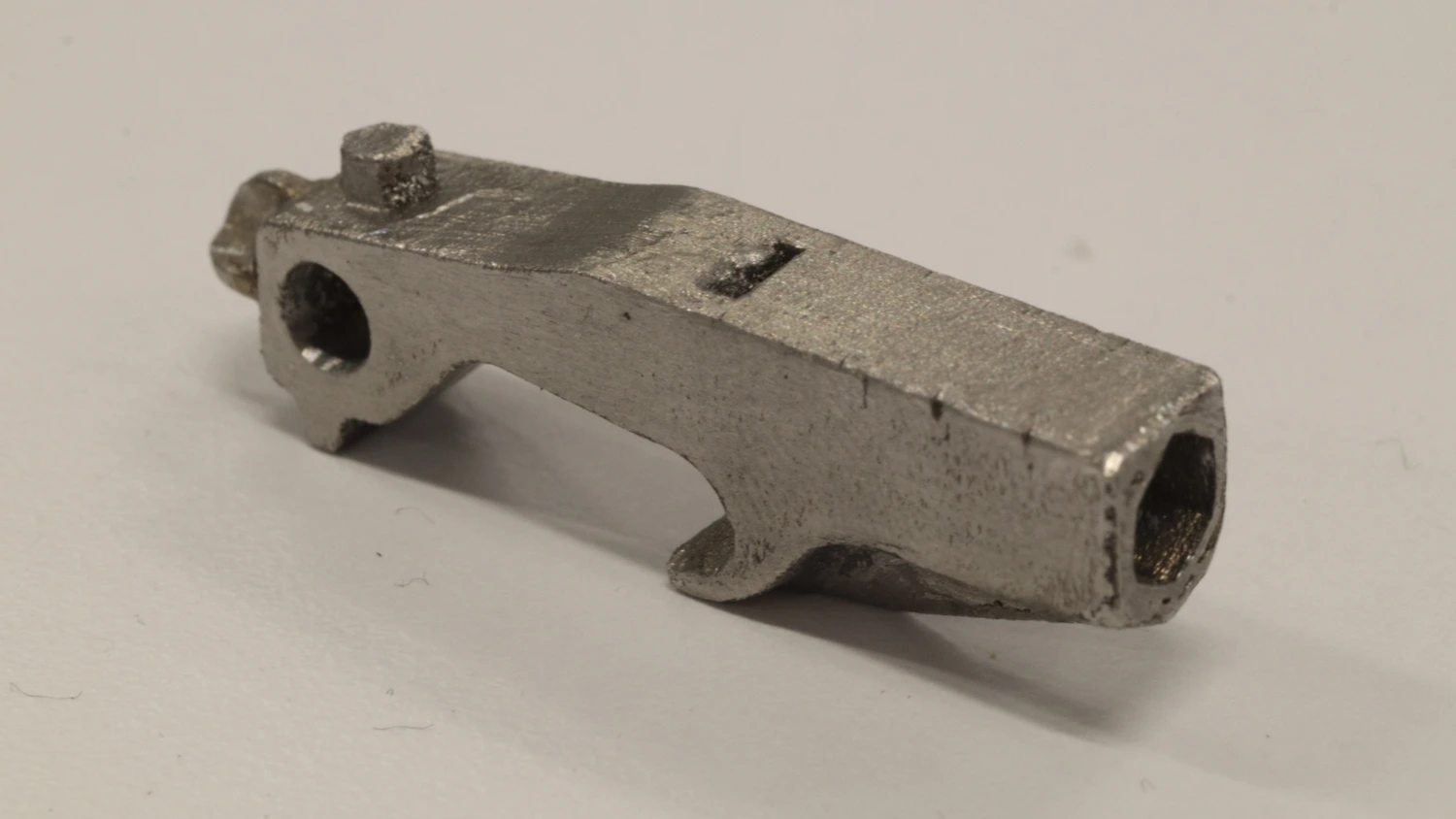
A compact, non-movable multitool keychain produced via selective laser sintering in steel. Designed for everyday carry with multiple integrated functions.

SLS CAD Prototyping University Project

Background

The brief was open-ended, so I designed something I'd genuinely want on my keychain. During sketching I noticed the silhouette looked like a chicken, with the Philips head as the comb and the flathead as the beak. I have pet chickens, so it stuck.

Tools

Scraper, 3.5mm Philips driver, flathead, bottle opener, and a keyring holder cover the everyday stuff. The 2.5mm Allen key was added for my camera tripod adapter specifically. The most interesting part is the magnetic bit holder, which takes my Xiaomi 62-bit set. Two 3x2x1mm magnets press-fit into a pocket and hold bits in securely while still being easy to swap, so the tool is compatible with 60+ screw types.

Getting it Right

A few FDM prototypes sorted out placement and tolerances before going to steel. The Philips tip was the most finicky part, with tips distorting until features were kept above 0.4mm. The bottle opener also got a finger slope after the first version felt uncomfortable. Internally, corners are filleted to 0.5mm and slopes kept under 45° throughout.

Finishing

The steel print arrived with a rough base from the build plate, which got sawed off and filed flat. A Dremel wire brush and sandpaper finished the surface. Around 2.5 hours of work.

If I Did it Again

The bottle opener would be flipped. The ruler markings failed to print and couldn't be fixed. The part also came out heavier than expected since I was conservative with material removal in structural areas. Everything functioned correctly though, and the bit holder fit exactly as intended.

Stats

7 tools  ·  Print: 6 min  ·  Post-processing: 2.5 hrs  ·  Part volume: 856.676 mm³  ·  Supports: none

Glass Pane Lamp Stand

Glass Pane Lamp Stand

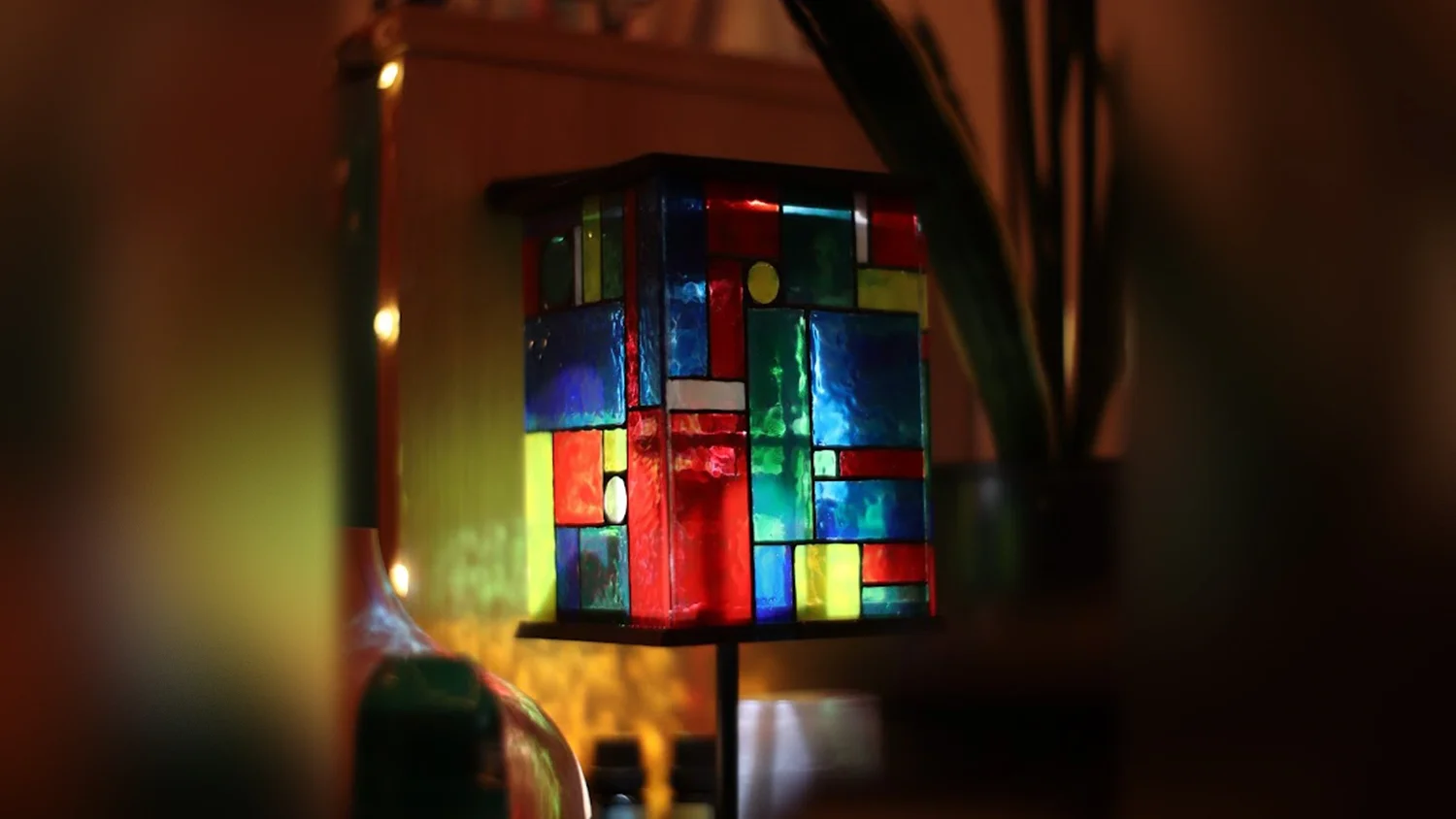
Designed and 3D printed a custom stand to hold four laminated glass panes as a lamp for a friend. Modelled around the exact pane dimensions for a secure fit.

3D Printing Custom Design
Film Scanning Setup

35mm Film Scanning Setup

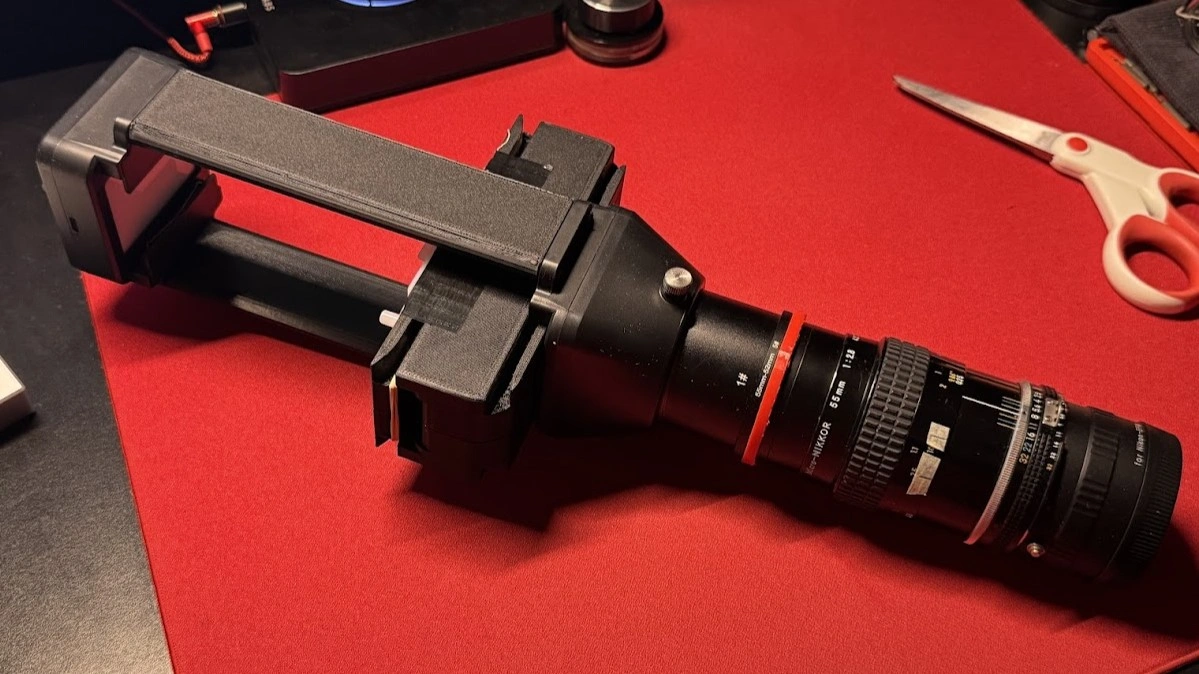
Assembled a camera-scanning rig for 35mm negatives, pairing a digital camera and macro lens with a diffused light source for consistent colour and detail across an entire roll.

Film Photography Digital
Camera Repair

Camera and Lens Repair

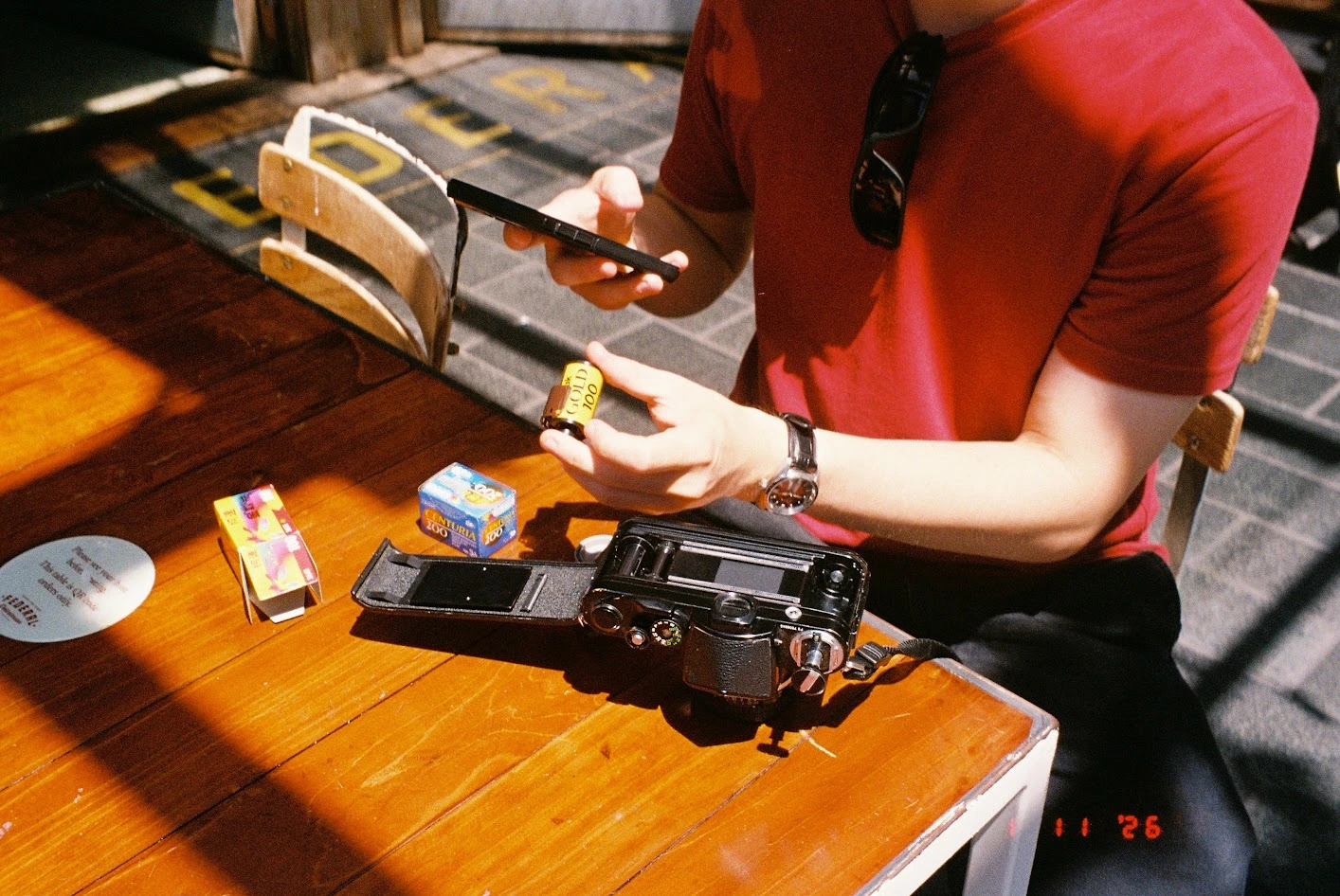
Repaired and serviced several film cameras and lenses, including lens element disassembly and cleaning, foam seal replacement, and light meter calibration.

Film Repair CLA
Mouse Repairs

Mouse Repairs & Enhancements

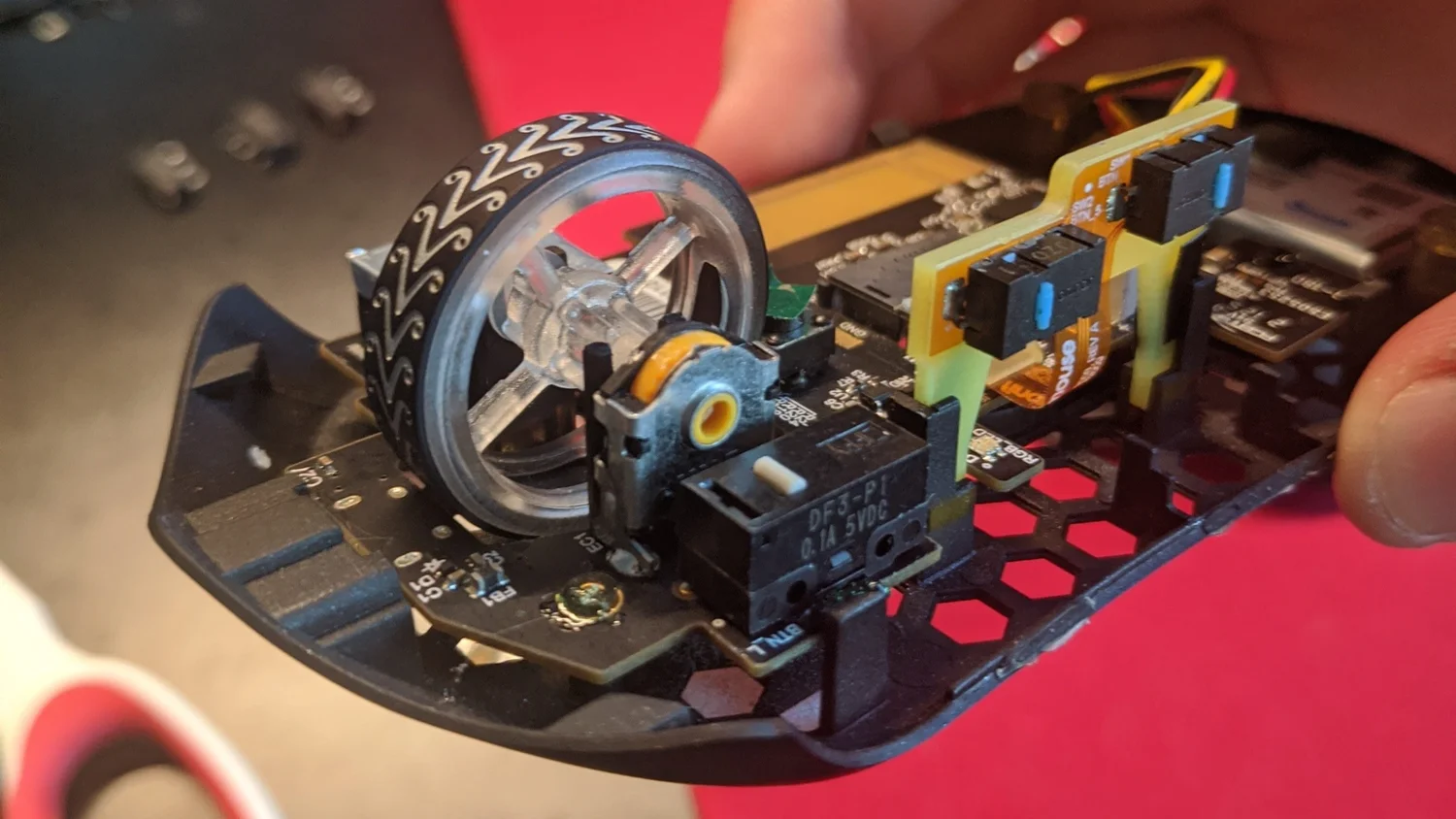
Repaired and upgraded mice by replacing worn microswitches and scroll wheel encoders with higher-quality alternatives, restoring click feel and extending hardware life.

Soldering Modding Repair
Keyboard Enhancements

Keyboard Enhancements

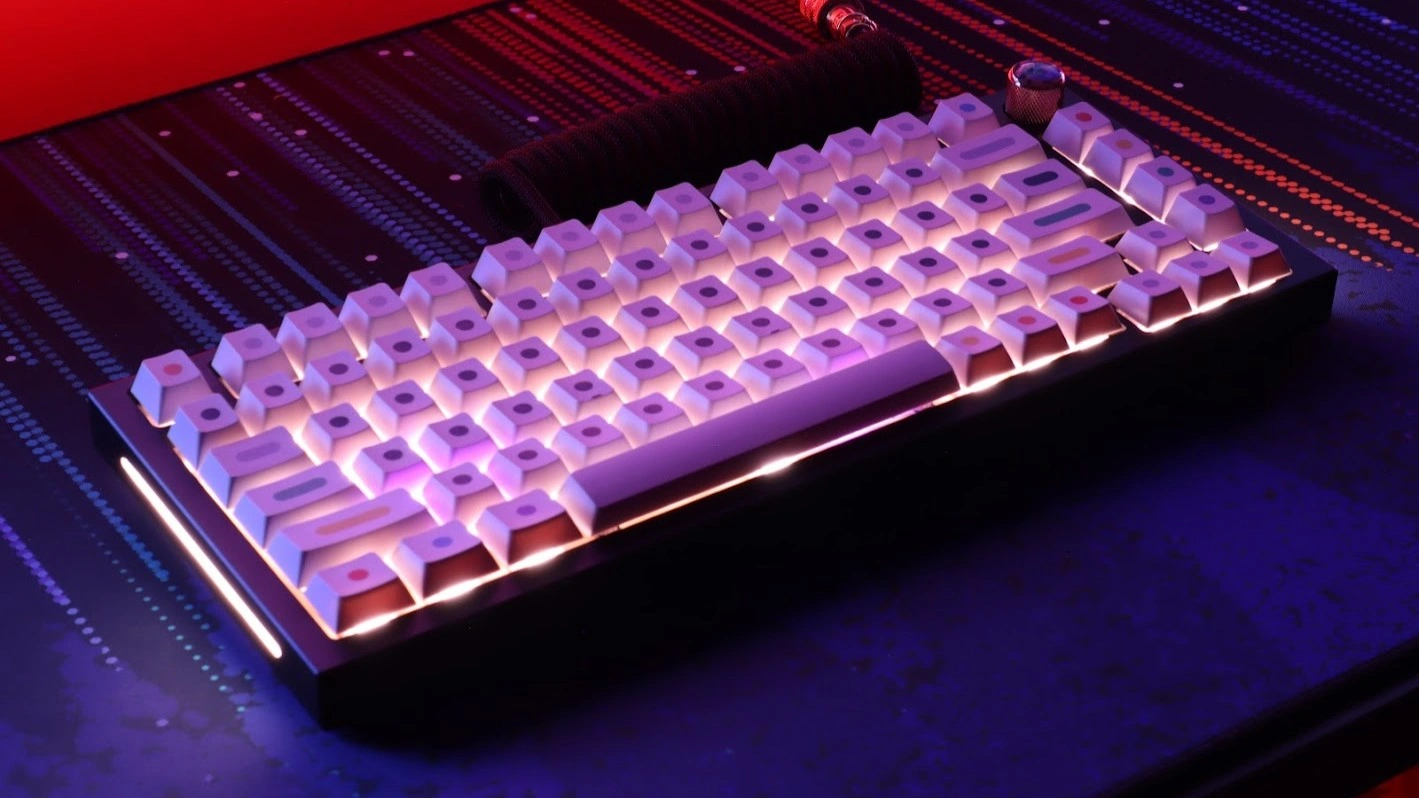
Performed various acoustic and feel improvements, including hotswap modding via hand-soldered Mill-Max sockets, switch and stabiliser lubing, foam dampening, and tape modding.

Soldering Modding
Photography Events

Photography Events

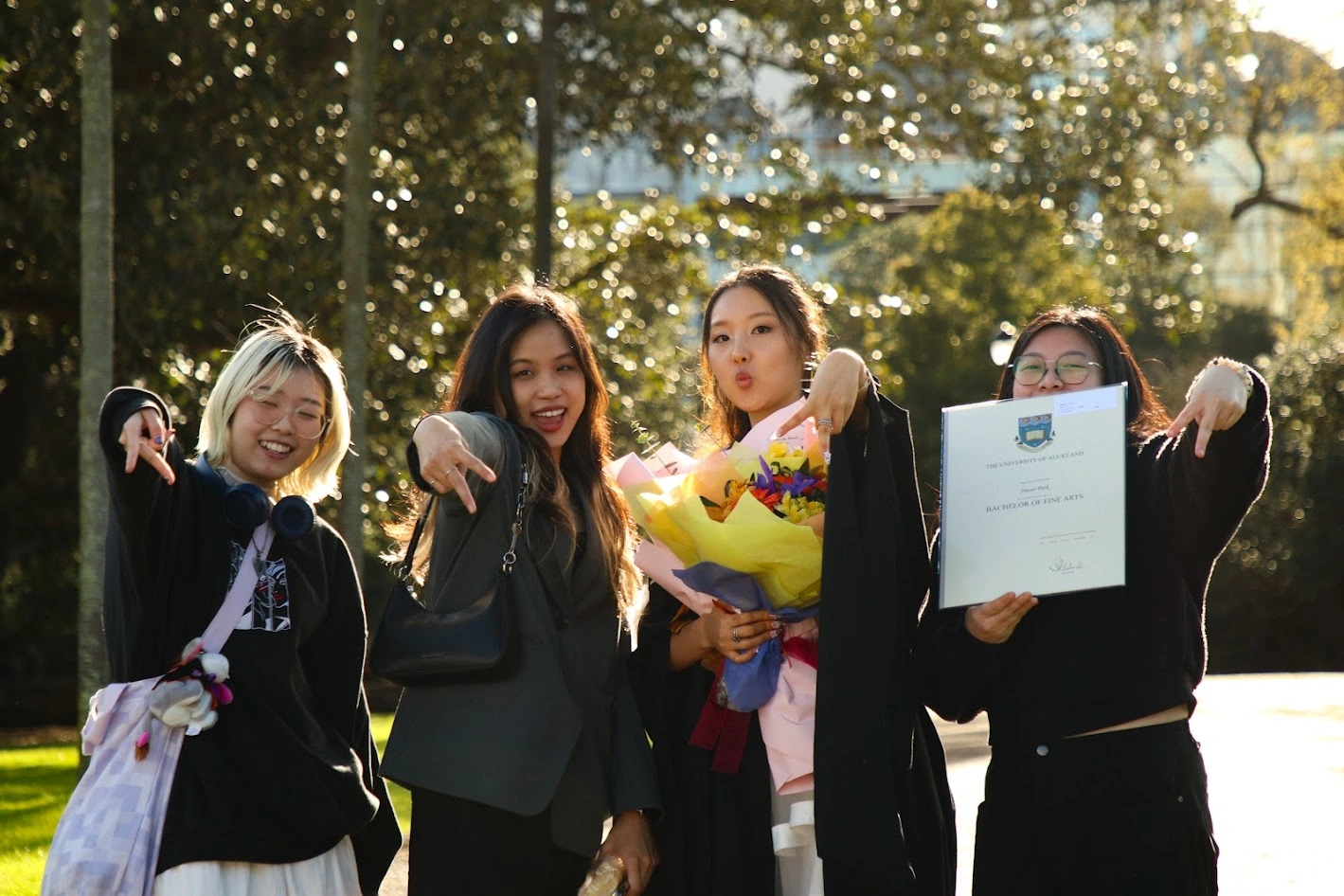
Shot graduation photos, 21sts, fashion shoots, and university society events, with a focus on candid moments and natural light.

Digital Events

Experience

  • Graduation Photos
  • 21st Birthdays
  • Fashion Photoshoots
  • Rainbow Law Cocktail Mixer 2025
  • SCSC x UMSA Build-a-Brew 2025
  • SCSC Latte Art Workshop 2025